
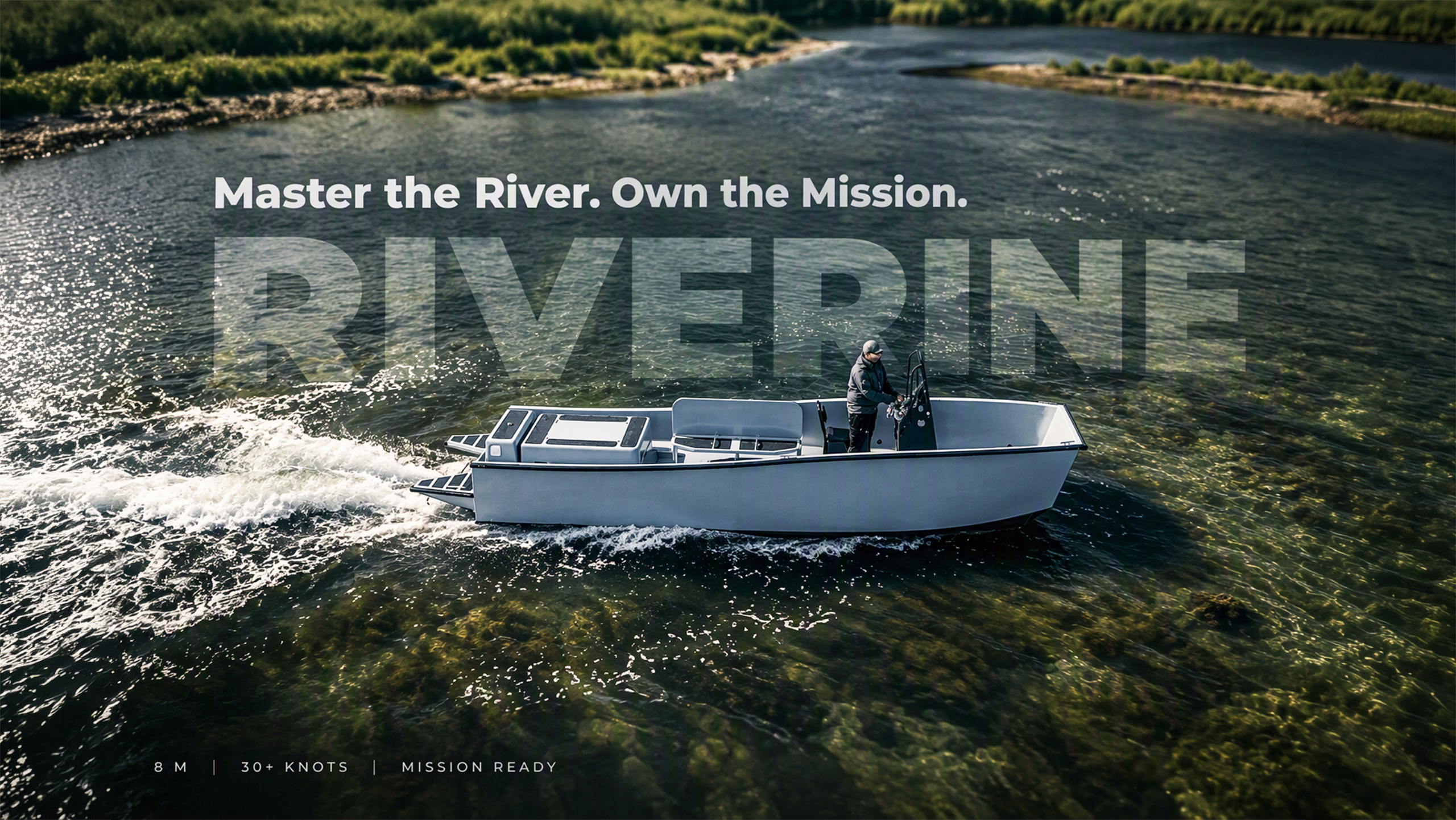
Tuco Marine Group continues its expansion into the African market with the sale of ProZero 8M Riverine S vessels to the Kenya Navy. The sale marks another step in the company’s long-term strategy of delivering robust, operationally flexible vessels to African navies and maritime authorities, and follows closely on the recent sale of two ProZero vessels to the Ghana Navy. With the delivery, Tuco expands its presence in East Africa while contributing to the modernisation of the Kenya Navy’s fleet. The ProZero 8M Riverine S has been developed specifically for demanding operations in shallow rivers, mangrove areas and coastal zones, environments where conventional vessels are often unable to operate effectively. A Partnership Rooted in Danish-Kenyan DiplomacyThe agreement is the result of a sustained process involving close cooperation with the Danish Embassy in Kenya, the Danish liaison officer to the Kenya Navy, Kjeld Gaard-Frederiksen, and the Danish government’s Peace and Stabilisation Fund, whose support has been instrumental in realising the project and in contributing to increased security in the region. In September, a delegation from the Kenya Navy and Kenya Shipyards Limited (KSL) visited Tuco’s shipyard in Faaborg, a visit arranged by Gaard-Frederiksen in cooperation with Danske Maritime. The visit gave the Kenyan representatives first-hand insight into the production of the ProZero vessels and provided an opportunity for constructive discussions on how the vessels could be tailored to the Kenya Navy’s operational needs. In December, Tuco’s CEO, Jonas Pedersen, and International Business Developer, Magnus Bang, travelled to Kenya to meet with the leadership of both the Kenya Navy and KSL, gaining a deeper understanding of the specific requirements and challenges faced by the Kenyan maritime authorities. The Vessel: ProZero 8M Riverine SThe ProZero 8M Riverine S is purpose-built for military riverine operations in hostile and demanding terrain, where branches, reeds, trees and other natural obstacles typically bring conventional vessels to a halt. Length: 8 m Beam: 2 m Draft: 0.60 m (shallow-water configuration) Capacity: 7 persons (6 operators + 1 crew); max. load 1,000 kg Propulsion: 1x inboard diesel; top speed 30+ knots Hull construction: Glass- and carbon-fibre sandwich construction with PVC core, providing buoyancy and water resistance while eliminating internal stiffeners to maximise usable deck space Fendering: Heavy-duty D-runner profiles that absorb major impacts with purely cosmetic damage Deck: Self-bailing, with central bench seating and a helm station featuring a jockey seat, compact console and optional windscreen The hull is designed for stability in harsh conditions, while the lightweight composite construction keeps weight, and operating costs, down, reflecting the design philosophy that runs through the entire ProZero range. The Heart of the System: Swamp Shark DriveWhat truly sets the ProZero 8M Riverine S apart from conventional riverine craft is its propulsion system. The vessel is equipped with the Swamp Shark Drive, a groundbreaking surface drive that Tuco, through ProZero International, holds exclusive distribution rights to across Europe, Ghana, Kenya and other markets. Where conventional outboard motors and Z-drive systems are easily damaged by floating logs, rocks, sandbanks or other debris, the Swamp Shark Drive is engineered to absorb exactly that kind of impact without damaging the gearbox or drive system. The technology is built on multiple patented, electronically controlled hydraulic solutions, including a self-contained, stainless-steel keel-cooling system with hydraulic stabilisers that makes the drive independent of external water cooling. Power steering delivers smooth, precise manoeuvring, and with no appendages protruding beneath the hull, the drive’s vulnerability to groundings and obstacles is significantly reduced. The result is a vessel that can operate in shallow, debris-filled and heavily vegetated waters, river mouths, mangrove forests and swampy coastal stretches, where traditional craft would run aground or sustain damage. For the Kenya Navy, this means access to waters that would otherwise be unreachable, giving a genuine tactical advantage in operations that require a presence in hard-to-reach areas. Strengthening Maritime Security in the RegionThe partnership with the Kenya Navy is an important step in Tuco’s long-term strategy to deliver solutions that strengthen maritime security across Africa. The vessels support regional efforts to combat illegal fishing, smuggling and piracy, while also contributing to capacity-building within the African maritime sector. With the establishment of ProZero Ghana LTD, Tuco has already built a strong presence in West Africa through local production and technology transfer in partnership with Ghanaian partners. The sale to the Kenya Navy shows that the same strategy is now firmly taking hold in East Africa, as Danish shipbuilding technology gains a foothold in an increasing number of African waters. “We are proud to deliver ProZero vessels to an African navy. With Swamp Shark Drive technology and our ProZero vessels, we ensure that our customers get the best possible solution for demanding operations. We look forward to continuing to support the Kenya Navy and other maritime actors in the region with reliable and innovative vessels.” – Jonas Pedersen, CEO, Tuco Marine Group Tuco Continues Its Growth in AfricaTuco Marine Group is seeing rising demand for robust, operationally flexible vessels in Africa, where both military and civilian operators need reliable solutions for demanding missions. The delivery to the Kenya Navy is a further demonstration that the ProZero concept, low weight, high flexibility and strong lifecycle economy, combined with the Swamp Shark Drive’s unique ability to handle the most challenging waters, resonates with operators working in conditions that leave no room for failure. Tuco expects to continue expanding its activities across the African continent in the years ahead.
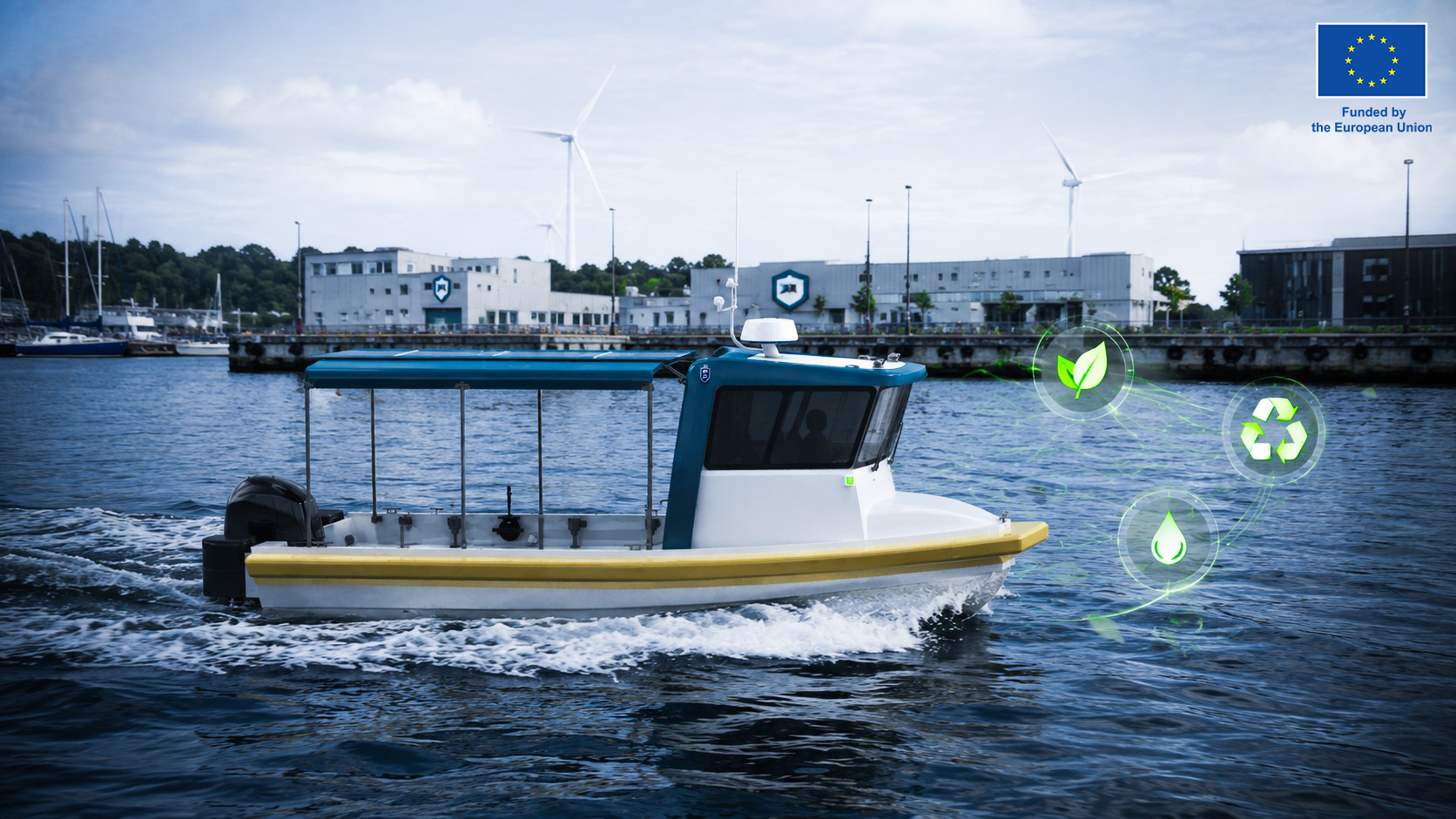
REFEST – Retrofitting for Greener Fisheries
REFEST is an EU-funded Horizon Europe project (Grant Agreement No. 101157663) supporting the development of retrofit technologies that can help reduce fuel consumption and emissions on existing fishing vessels. The project explores practical, scalable solutions that can be integrated without major structural changes, with the aim of enabling small-scale fishing communities to adopt more energy-efficient and environmentally responsible operations. Driving Sustainable InnovationTuco Marine Group is proud to contribute to REFEST as one of the industrial partners. The project focuses on developing cost-effective retrofit concepts that may enable existing vessels to reduce emissions by up to 40%, depending on vessel type, operational profile and technology configuration. By improving current fleets rather than replacing them, REFEST supports a more resource-efficient and economically viable pathway for the fishing sector. European CollaborationREFEST brings together 14 partners from 10 European countries, including research institutions, technology developers, fishing organisations and maritime industry experts. This broad collaboration ensures that new ideas are grounded in both scientific research and practical operational experience. As part of the consortium, Tuco Marine Group contributes expertise in innovative vessel design, lightweight structures and sustainable marine solutions. Our role supports the development and assessment of retrofit technologies that can be applied across diverse European fishing fleets. Looking AheadThe project partners are currently developing and testing several technologies, including battery integration concepts, smart sensor systems and other energy-efficient solutions. These activities are carried out in close collaboration with fishing fleets across Europe to ensure that the solutions are practical, scalable and aligned with real operational needs. REFEST aims to deliver knowledge, tools and demonstrators that can support a greener future for the maritime sector – while respecting all obligations under Horizon Europe, including proper implementation, conflict-of-interest management, data protection and communication requirements. Project FundingREFEST is funded by the European Union under the Horizon Europe programme. Tuco Marine Group’s participation follows all obligations under the Grant Agreement, including communication, dissemination and visibility requirements.

Part 3/3: How a workboat becomes a precision instrument, the engineering behind clean survey data.
Buy the best multibeam on the market, bolt it to the wrong boat, and you will collect expensive noise. The uncomfortable truth of hydrography and ocean survey is that data quality is decided by the platform as much as by the sensor. What follows is a tour of what the modern kit can really do, how deep, how accurately, and the concrete physical problems a survey platform has to solve to let it. It is written to be readable without a hydrography degree, but the numbers are real. Keeping the hull acoustically quiet A multibeam echo sounder works by sending a fan of sound down at the seabed and timing the echoes across a wide arc. Its enemy is air. Cavitation bubbles and the sweep-down of aerated water from the bow get entrained under the hull, right across the transducer face, and because the sonar runs at high frequency (a modern shallow-water head sweeps roughly 150–700 kHz), even a thin curtain of microbubbles will scatter the beam and blank part of a swath. There is a physical trade-off underneath this: higher frequencies give finer resolution but are absorbed faster, so they reach less deep and are more easily disrupted by bubbles; lower frequencies reach further but resolve less. The faster and harder the boat works, the more air it drags under itself, so the problem is worst exactly when you want to survey efficiently. The solution is a hull decision, not a sensor decision: shape the flow under the transducer with computational fluid dynamics before the boat is built, recess the transducer into a faired sea-chest or gondola, and keep bow-generated bubbles from sweeping aft over it. Flow noise across the transducer face matters too, not just bubbles. Get this wrong and no amount of processing recovers the data, which is why it is the single most under-appreciated factor in survey-boat design. A structure stiff and silent enough to trust A survey system is calibrated so it knows the exact offsets and angles between the sonar, the motion sensor and the GNSS antennas, down to millimetres and hundredths of a degree. If the hull flexes as fuel burns off or the sun heats one side, those offsets drift and the seabed smears. A carbon-fibre sandwich composite hull, built in one shot by vacuum infusion, is exceptionally stiff and dimensionally stable, thanks to carbon’s high stiffness-to-weight and very low thermal expansion, it holds its geometry better than a heavier steel or aluminium equivalent. It is also light, which buys two things at once: a shallow draft to work the shallows, and enough weight margin that a ~15.6 m platform can still be lifted onto a mother ship’s davit at around 15 tonnes and yet transit at close to 39 knots on twin 600 hp drives. Noise and vibration matter too, but not in the way people assume. A multibeam works hundreds of kilohertz above engine noise, so the two rarely compete directly in the same acoustic band. What vibration really threatens is the calibrated sensor mount and the acquisition electronics, and a noisy cabin wears down a crew working a full survey shift. So the platform is engineered to decouple both: a floating floor separates the cabin from the hull to cut structure-borne noise, ProZero Research & Survey Workboats, SoMe Series and the transducer mount and electronics are isolated from machinery vibration. A gyro stabiliser adds to this by physically damping roll, which, as the next section explains, directly widens the part of each swath you can actually use. Knowing exactly where the sonar was, and how it was pointing, to the microsecond A sounding is only as good as your knowledge of where the transducer was and how it was tilted at the instant of the ping. That job falls to a GNSS-aided inertial navigation system, the class of kit exemplified by an Applanix POS MV OceanMaster. It fuses two GNSS antennas with an inertial measurement unit so that heading is held to about 0.01° (given a GNSS antenna separation of roughly 4 m) and, crucially, is immune to the magnetic errors that plague a compass; heave is measured with no settling time; position is resolved to a few centimetres using RTK corrections in real time or post-processed kinematic (PPK) afterwards; and every value is time-tagged to the microsecond so there is zero latency between the navigation data and the acoustic data. Why it matters is geometry. At the edge of a wide swath (±60° and beyond) a tiny attitude error is multiplied by the slant range, so a few hundredths of a degree can become decimetres of vertical error in deeper water. That is why the whole system has to be calibrated with a “patch test” before real work begins, running reciprocal lines over a slope, a flat and a discrete object to solve, in order, the timing latency and then the roll, pitch and yaw misalignment (the boresight) between the motion sensor and the sonar head. Latency alone, uncorrected, throws soundings along-track; even tens of milliseconds are visible in the data. The motion system and its calibration are what let a surveyor trust the outer beams instead of throwing them away. The sonar itself, how deep, how wide, how fine, and what else it sees Now the sensor can do its job. A modern dual-head shallow-water multibeam, the Kongsberg EM-series is the reference point, maps from about 0.5 m under the keel to several hundred metres at 300 kHz, extending to around 600 m in a lower-frequency (200 kHz) mode (in shallow coastal work the useful band is the top 100 m or so). It is frequency-agile across ~150–700 kHz: around 300 kHz for general mapping, 400 kHz for structure inspection, and 600–700 kHz for small-object detection and fine 3D work, with beamwidths as tight as 0.4° by 0.7°. It fires up to 50 pings a second and returns up to around 1,024 soundings per ping in standard mode, rising to some 4,000 in quad-swath modes, with
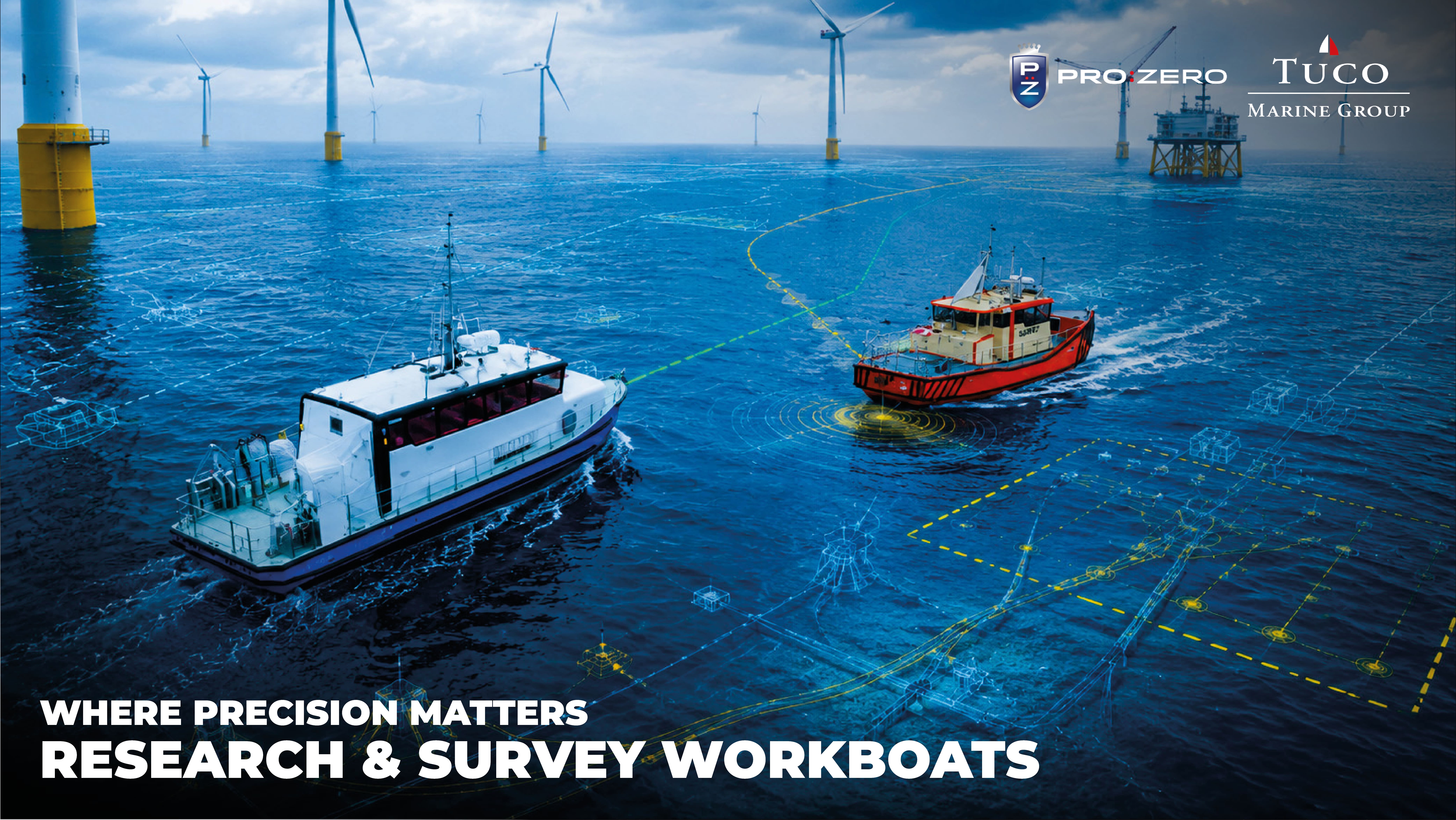
Part 2/3: The built ocean, the survey work behind everything we put on the seabed.
We are building and defending more on and under the sea than at any time in history: wind farms, cables, pipelines, interconnectors, ports and coastal defences. Every one of them sits on a seabed that has to be mapped before it is touched and watched for as long as it is in service. Underneath the visible engineering, the built ocean is a survey business, and the standard it must meet is exacting. The standard that governs safe waterBefore anything else, waterways have to be charted accurately enough to trust. The benchmark is the International Hydrographic Organization’s S-44 standard, now in its 6th edition, which specifies every survey by five things: horizontal and vertical uncertainty, feature detection, feature search and bathymetric coverage. Vertical accuracy is not a single figure, it is defined so a fixed allowance combines with a term that grows with depth, keeping a survey honest whether the water is two metres or two hundred. The Orders set the bar: the new Exclusive Order, written for critical harbours and channels with minimal under-keel clearance, sets a fixed vertical-uncertainty floor of about ±10 cm, with the allowable uncertainty growing with depth, to roughly ±0.3 m at 40 m, plus full seafloor coverage and detection of objects as small as roughly half a metre; Special Order now also requires 100% coverage; and Order 1a demands a complete feature search that must find anything larger than a two-metre cube in water shallower than 40 m. In a busy channel where clearance under a laden hull is measured in tens of centimetres, that is the difference between a chart you can trust and one you cannot, and much of it is worked in half a metre of water, on a hull that can survive touching bottom. Offshore wind: a decade of survey, per project.The scale is set in policy. At the 2023 Ostend summit, nine North Seas countries committed to roughly 120 GW of offshore wind by 2030 and 300 GW by 2050, from under 30 GW today, a build-out measured in thousands of turbines and well over a hundred thousand kilometres of cable. And none of it is surveyed once. Site characterisation, before construction, runs a coordinated sensor spread: a multibeam echo sounder for bathymetry, side-scan sonar for seabed texture and debris, a sub-bottom profiler for the shallow geology, and a magnetometer or gradiometer to find buried steel, feeding geotechnical sampling and, critically in the North and Baltic Seas, dedicated unexploded-ordnance survey. Both World Wars left the seabed littered with munitions, and UXO clearance along every cable route and around every foundation needs far denser data than a normal chart: tighter line spacing and higher ping density to resolve small individual targets. Then comes operational monitoring, repeated for the 25-to-30-year life of the asset. The recurring questions never change: how deep is each cable buried now, its depth-of-lowering, how much scour has opened around each monopile since the last visit, and is any free span approaching the length at which vortex-induced vibration will fatigue it? Because those answers are needed again and again to a fixed plan, this is the work moving fastest onto uncrewed platforms: XOCEAN has run large seabed-survey campaigns for Vattenfall across wind farms in Denmark, Sweden and the UK using electric USVs, which can cut a survey’s carbon footprint by up to 99% versus a crewed vessel; and transoceanic USVs such as Exail’s DriX O-16 now offer around 30 days’ endurance and roughly 3,500 nautical miles of range carrying survey-grade multibeam. Floating wind will push the same work into deeper water still. According to Fortune Business Insights, the wider hydrographic survey-equipment market is forecast to grow from about USD 4.0 billion in 2026 to USD 6.6 billion by 2034 (other analysts put the current market somewhat lower). Holding the coastCoastlines are actively managed, and every intervention is bracketed by survey. Authorities run full-coverage measurement before sand nourishment and again afterwards, differencing the two seabed surfaces to confirm exactly how many cubic metres landed where they were meant to, and how the profile behaves a season later. They survey licensed sand-extraction areas repeatedly, often adding a sub-bottom profiler to map the thickness of workable sand beneath the seabed, and they inspect built structures, locks, groynes, breakwaters, revetments, where the multibeam is switched to a higher frequency (600–700 kHz) to resolve individual armour blocks and the scour developing around them. The Danish Coastal Authority has surveyed Danish waters since 1874, today to millimetre order; as sea level rises and storms intensify, that recurring evidence base is what coastal-protection budgets and safety cases are built on, and much of it happens in the turbid, shallow surf zone where general-purpose vessels cannot work. The seabed as critical infrastructure.What lies on the seabed is now a security question. Some 600 submarine cables carry on the order of 99% of intercontinental data and underpin well over USD 10 trillion in daily financial transactions, across more than a million kilometres of ocean floor, and the Baltic has shown how exposed they are. After Nord Stream in 2022, the C-Lion1 and BCS East-West cables were severed in November 2024, and on 25 December 2024 the Estlink 2 power cable and several telecom cables were cut when a tanker dragged its anchor for nearly 100 km; by early 2025 some eleven cables had been damaged in fifteen months, prompting NATO’s “Baltic Sentry” patrol mission. Protecting this infrastructure depends on knowing the shallow-water seabed in fine detail, holding an accurate baseline, and re-surveying on demand to detect what has changed. Shallow-water hydrography has become seabed intelligence and maritime domain awareness, work that rewards platforms able to carry autonomy and situational-awareness sensors and to be tasked at short notice. Why the platform is the enabler.The thread through all of it is that these are not one-off jobs but decades-long programmes of repeated, standardised, high-accuracy measurement, and that rewards platforms designed around their sensors, tolerant of shallow water and grounding, cheap enough per kilometre to run often, and increasingly
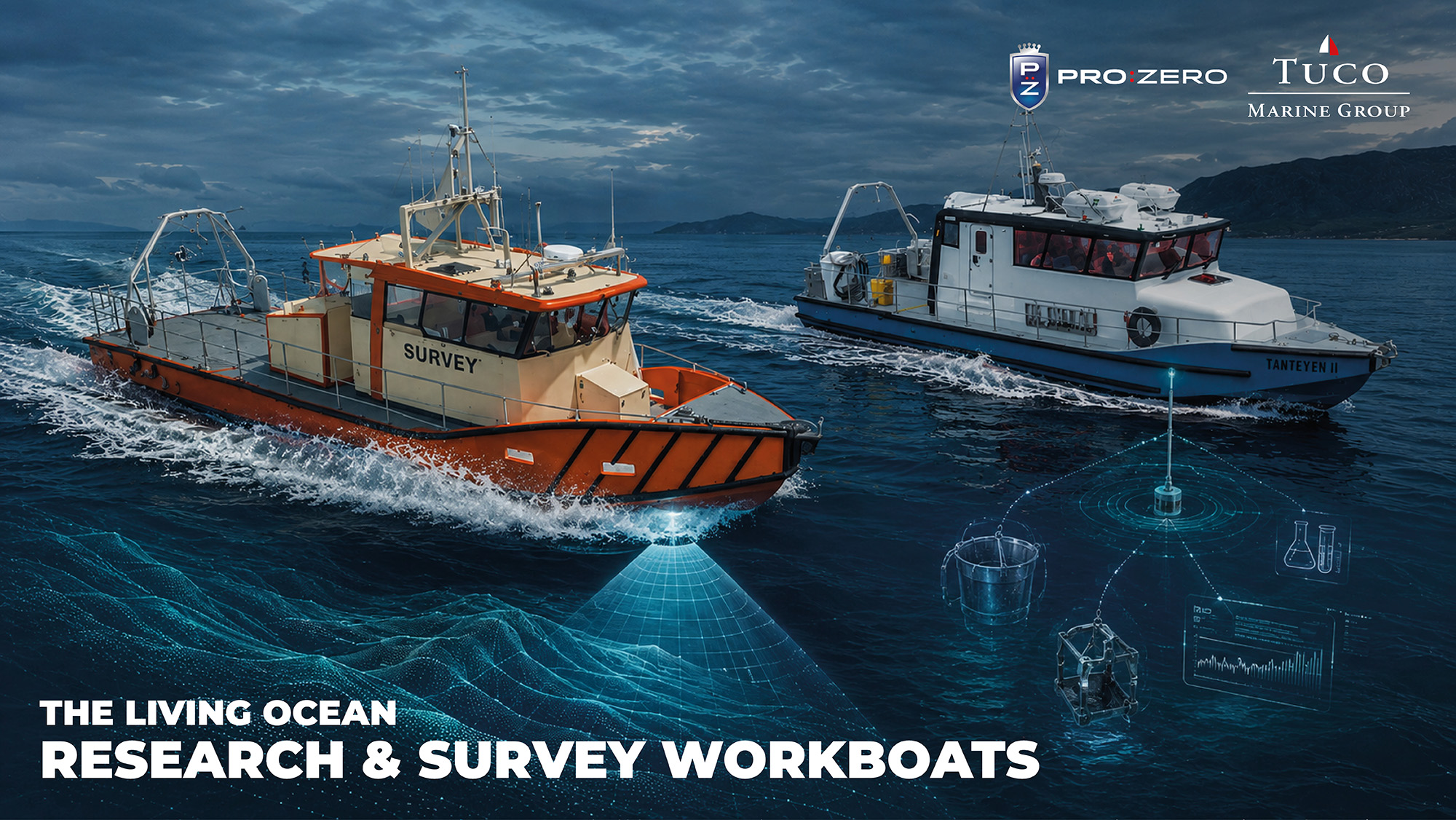
Part 1/3: The living ocean we can barely see, and why studying it is now a platform problem.
We are making decisions about the ocean, how to protect it, restore it, fish it, build in it, on the basis of remarkably little observation. The sea covers seven-tenths of the planet and holds most of its living space, yet it remains the least-known environment we depend on. Closing that gap is one of the great scientific and industrial undertakings of the century, and it runs, at its foundation, on getting the right platforms and sensors into the water. This is the part of the ocean story that gets the least attention and deserves a lot more. The scale of what we don’t know.The numbers are genuinely startling. Only about 27% of the seabed has been mapped to modern resolution under the Seabed 2030 programme. Of the deep sea, everything below 200 m, which makes up roughly two-thirds of the planet, we have visually observed a fraction of one-thousandth of one percent of the floor. By the estimates the Ocean Census works from, as many as 90% of ocean species may still be undescribed, and on average around 2,000 new marine species are formally accepted each year. In its most recent year alone (April 2025 to March 2026), the Ocean Census initiative logged more than 1,100 new species across thirteen expeditions, and even that pace is limited by a process in which the average time from collecting a specimen to formally describing it has historically been about 13.5 years. The living ocean is not a solved problem; it is a frontier. The ecosystems hidden in the deep.The deep sea is not empty. Seamounts, undersea mountains rising from the abyss, concentrate currents and nutrients and act as biodiversity hotspots and engines of speciation. Cold-water corals build reef structures in perpetual darkness, feeding on plankton and organic matter drifting down from above rather than on sunlight. At hydrothermal vents and cold seeps, entire communities live on chemosynthesis, bacteria turning chemicals from the Earth’s interior into energy, supporting highly endemic species such as the scaly-foot snail, known from just three vent sites in the Indian Ocean. These habitats are ancient, slow-growing and acutely vulnerable to disturbance, which is exactly why baseline surveys and long-term monitoring of them matter before, not after, any human activity reaches them. The health of the seas we already use.Closer to home, the picture is one of measured decline. Under the EU Marine Strategy Framework Directive, “good environmental status” is assessed against eleven descriptors, from biodiversity, food webs and commercial fish stocks to eutrophication, seafloor integrity, contaminants, litter and even underwater noise, and across Europe’s regional seas that status has not been achieved on all of them. The Baltic is the stark case: more than 97% of it is affected by eutrophication, and its oxygen-starved “dead zone” has expanded over the last century to roughly 70,000 square kilometres, about the size of Ireland, leaving large parts of the deep seabed without visible life. Meanwhile the EU has committed to protect 30% of its seas by 2030, with 10% strictly protected, against about 13.7% protected and only around 1% strictly protected today. Every one of those targets is, in practice, a monitoring obligation: you cannot designate, manage or defend a protected area you have not surveyed, and you cannot claim recovery you cannot measure. How marine life is actually measured now.Modern ecosystem work is a layered toolkit, and the platform has to carry and deploy all of it. Multibeam backscatter, the strength of the sonar return, not just the depth, is used to classify the seabed into sand, gravel, rock and reef, producing the habitat maps that underpin conservation. Physical sampling still matters: CTD probes and water-sampling rosettes profile the water column, ADCPs measure currents, and grabs, box corers and sleds recover sediment and the animals living in it. Video and stills from ROVs, AUVs and towed camera systems ground-truth the acoustics. And a quieter revolution is under way in environmental DNA: from a simple water sample, metabarcoding can detect the genetic traces of hundreds of species at once, rare, cryptic and invasive ones included, non-invasively, and increasingly through autonomous samplers that let a platform census biodiversity without a net ever touching the water. None of these replaces the others; together, mounted on a stable, sensor-friendly platform, they turn a stretch of sea into data. From monitoring to restoration.Europe has now made restoration a legal duty. The EU Nature Restoration Regulation, in force since August 2024, sets an overall target to restore at least 20% of EU land and sea areas by 2030, and requires listed marine habitat types in poor condition to be brought to good condition across 30% of their area by 2030, rising to 90% by 2050, with national restoration plans due in 2026. Much of the value lies in “blue carbon” habitats: seagrass meadows can store up to around 83 tonnes of organic carbon per hectare in their soils, per unit area up to roughly twice that of a terrestrial forest, and can lock it away for millennia while the meadow persists. But restoring seagrass, oyster and biogenic reefs, or disturbed sediment beds, only counts if you can prove it, which means a survey-quality baseline and years of repeated, comparable observation. That is a platform-and-autonomy problem long before it is a biology problem, the thinking behind Horizon Europe programmes such as DIGI4ECO (a partner is the Oceanographic Institute of Barcelona, ICM-CSIC), which pairs robotic “physical twins” with a digital twin of the ocean to track the 4D recovery of fishery-depleted habitats over time. From the surf zone to the abyss, one continuum of platforms.What ties this together is that the science spans an enormous range of scale, and no single hull covers it. Shelf and coastal monitoring, the habitat maps, the eDNA transects, the benthic sampling that feed national and EU obligations, is done efficiently from compact, shallow-draft research and survey boats that can work close inshore and in the shallows. Deep-ocean and expedition science is a different order of operation: large research vessels ranging worldwide, carrying ROVs, AUVs and submersibles rated to thousands of metres. But even at that scale the mother ship does not work alone. Launching and recovering those vehicles, running the fine survey lines, and putting scientists on the
Series Introduction: The ocean is the opportunity of the next decade, and it starts with getting on the water.
Understanding marine life we have barely begun to catalogue. Restoring depleted habitats. Powering the grid from offshore wind. Protecting the cables and pipelines on the seabed. These are among the defining projects of the decade, and every one of them begins the same way: someone has to observe the ocean, accurately and repeatedly. That has always been our world. For more than twenty years we have built for the organisations that study and manage the sea, hydrographic and coastal authorities, navies, universities and research institutes, and increasingly we build alongside them, including in European ocean-research programmes developing the next generation of autonomous and sampling platforms. It’s part of why several of our most advanced research and survey platforms are on the build floor right now. Over the coming weeks we’re publishing a three-part series that takes the wider view: the science and stewardship of the marine environment, the infrastructure and energy we build in the sea, and the sensor technology that makes the data trustworthy.
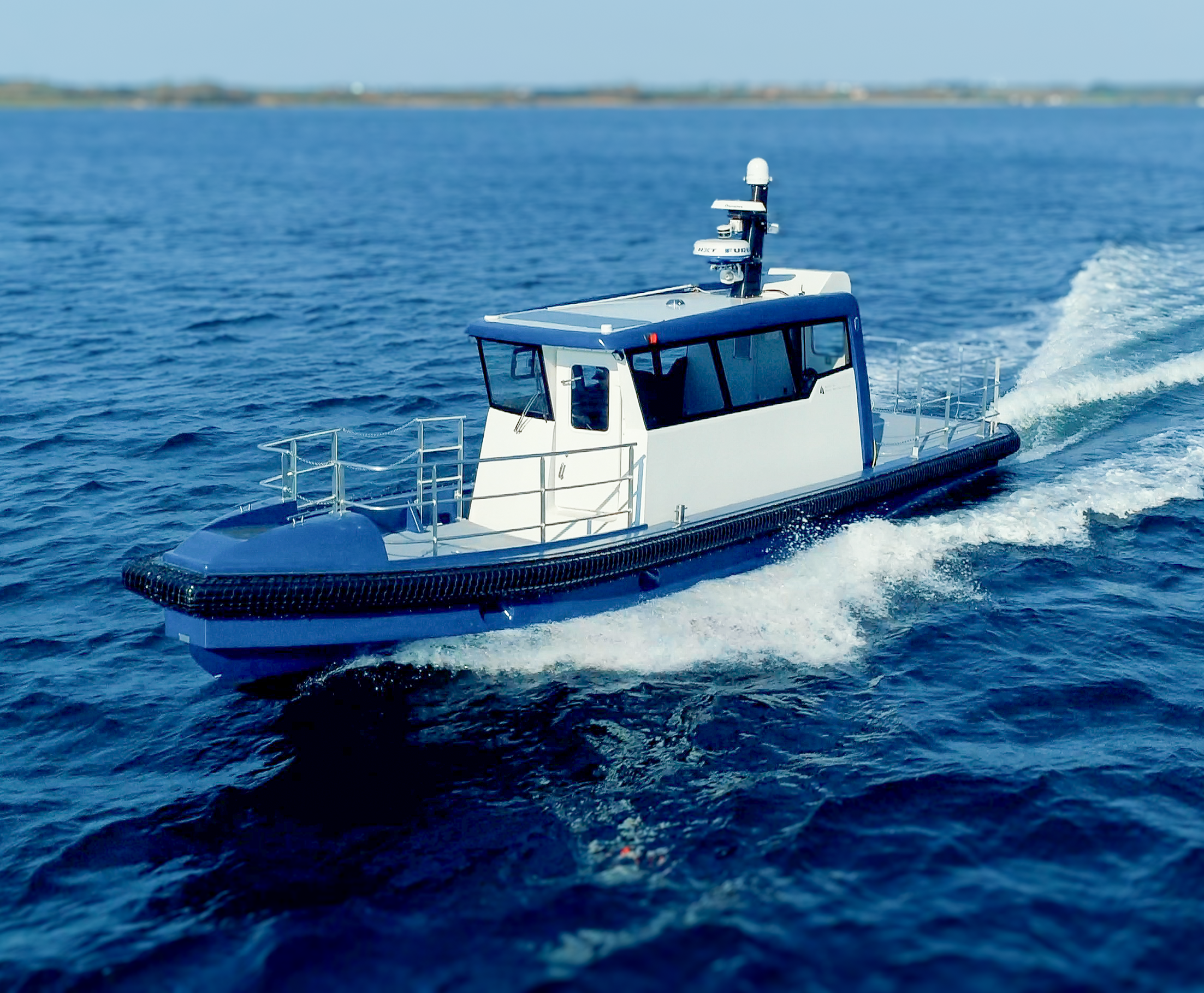
ProZero – 12m DC
ProZero 12M Daughter Craft – a versatile and charter-ready platform for multi-purpose offshore and coastal operations. Available for charter, the ProZero 12M Daughter Craft provides operators with immediate access to a flexible and highly capable vessel without the need for long-term ownership. This approach reduces capital investment while ensuring availability of a modern, well-equipped platform suited for a wide range of operational tasks. Built on the proven ProZero platform, the vessel combines a nimble size with an extensive equipment package, making it adaptable to various mission profiles. The interior layout is designed for versatility, with rail-mounted workstations and seating in the cabin, allowing quick reconfiguration depending on operational requirements. A large flush aft deck provides a safe, trip-hazard-free working area, enabling efficient execution of different tasks on deck. The cabin design ensures excellent visibility and a high level of natural daylight, significantly improving onboard comfort during extended operations. In addition, the cabin is mounted on rubber blocks to reduce vibrations, enhancing working conditions for crew and operators. The vessel’s lightweight construction, below market average, contributes to improved fuel efficiency while maintaining the well-proven seaworthiness of the ProZero hull design. The ProZero 12M Daughter Craft is prepared for future-ready operations, with technical installations compatible with autonomous and remote systems. The engine room is also designed with hybrid integration in mind, supporting evolving operational and environmental requirements. Constructed using an advanced composite sandwich structure combining glass and carbon fibre with a PVC core, the vessel achieves high structural strength while remaining lightweight. The core material provides natural buoyancy and eliminates water absorption, while the absence of internal stiffeners increases usable internal space. The construction also delivers inherent insulation properties, further enhancing comfort in both cabin and manned compartments. With its flexible layout, advanced construction, and charter-based availability, the ProZero 12M Daughter Craft offers a reliable and efficient solution for a wide range of offshore, survey, and support operations. Specifications Design: 2025 | 5000-02-04 Length overall: 12.3 m Beam overall: 3.1 m Draft (full load), approx.: 0.8 m Capacity: Manned / Unmanned Engines: 1 x inboard Diesel I AM INTERESTED IN THIS BOAT
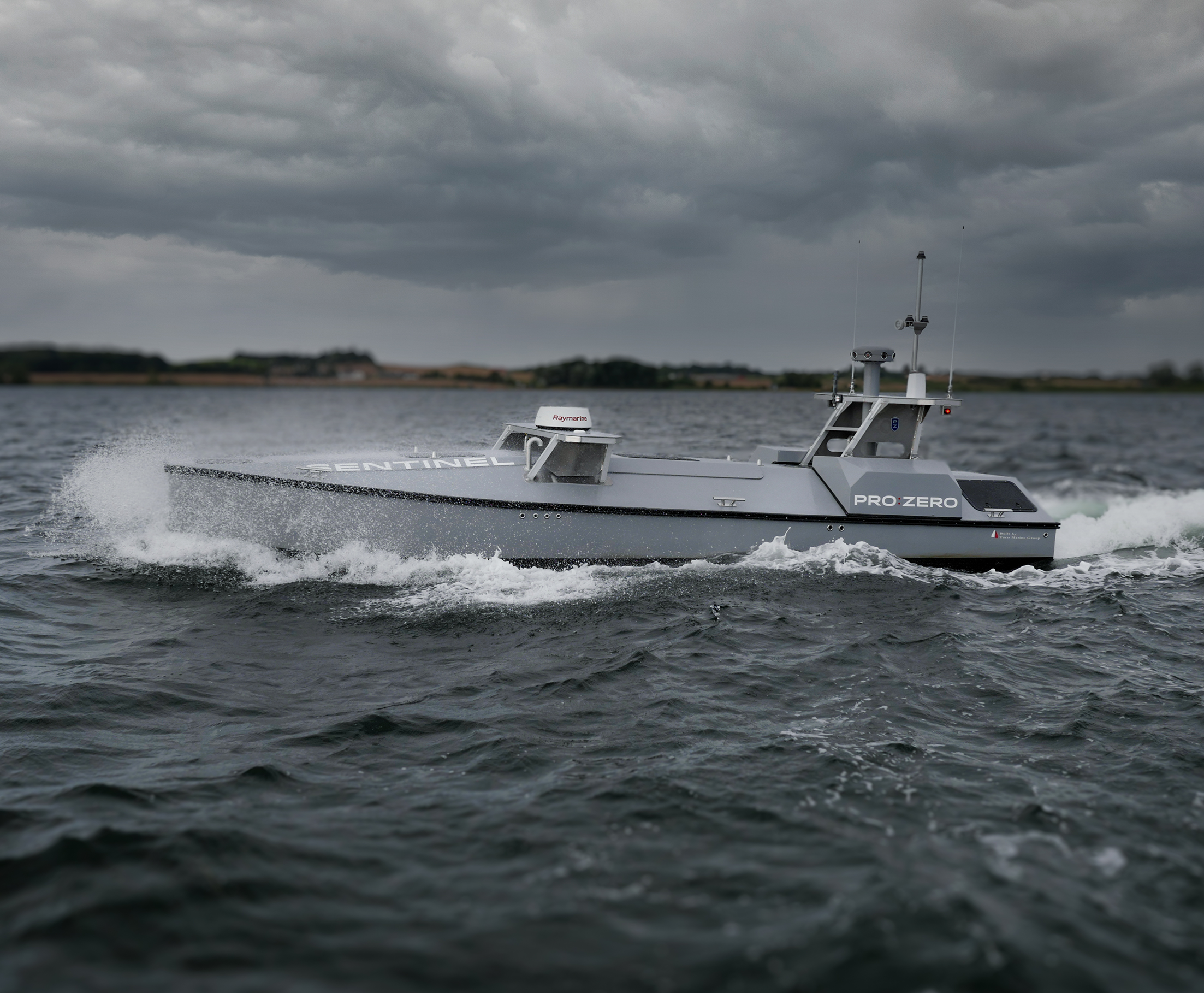
ProZero – 8m ISR USV
ProZero 8M ISR USV – a charter-ready unmanned platform for advanced Intelligence, Surveillance, and Data Acquisition operations. Available for charter, the ProZero 8M ISR USV provides operators with immediate access to a state-of-the-art unmanned vessel without the need for long-term ownership. This approach reduces capital investment while ensuring access to a fully operational, high-performance platform tailored for modern maritime missions. Specifically designed for ISR operations, the vessel supports custom mast configurations with client-defined antennas, radar systems, and sensor packages. This allows each deployment to be adapted to specific operational requirements, whether for coastal monitoring, asset protection, or advanced data acquisition. The ProZero 8M ISR USV is engineered to perform reliably in demanding marine environments. Its advanced propulsion system and precise manoeuvring capabilities ensure stable and efficient operation across a wide range of conditions, making it suitable for both nearshore and offshore missions. Through a charter-based setup, maintenance, servicing, and lifecycle management are handled as part of the solution, minimizing downtime and removing the need for in-house vessel management. This allows operators to focus entirely on mission execution while relying on a professionally maintained and mission-ready platform. Constructed using advanced composite materials, the vessel combines low weight with high structural strength, ensuring durability, efficiency, and minimal maintenance requirements. Its modular and adaptable design enables seamless integration of mission-specific equipment, supporting a wide range of ISR and survey applications. Prepared for launch and recovery of autonomous underwater vehicles, the ProZero 8M ISR USV enables true multi-domain operations, extending capabilities below the surface and enhancing overall data acquisition potential. With its flexible charter availability, advanced technology integration, and reliable performance, the ProZero 8M ISR USV represents a highly efficient and scalable solution for modern maritime surveillance and data-driven operations. Specifications Design: 2023 | 5000-01-35-5 Length overall: 8.2 m Beam overall: 2.3 m Draft (full load), approx.: 0.8 m Capacity: Unmanned Engines: 2 x inboard Diesel / electric I AM INTERESTED IN THIS BOAT
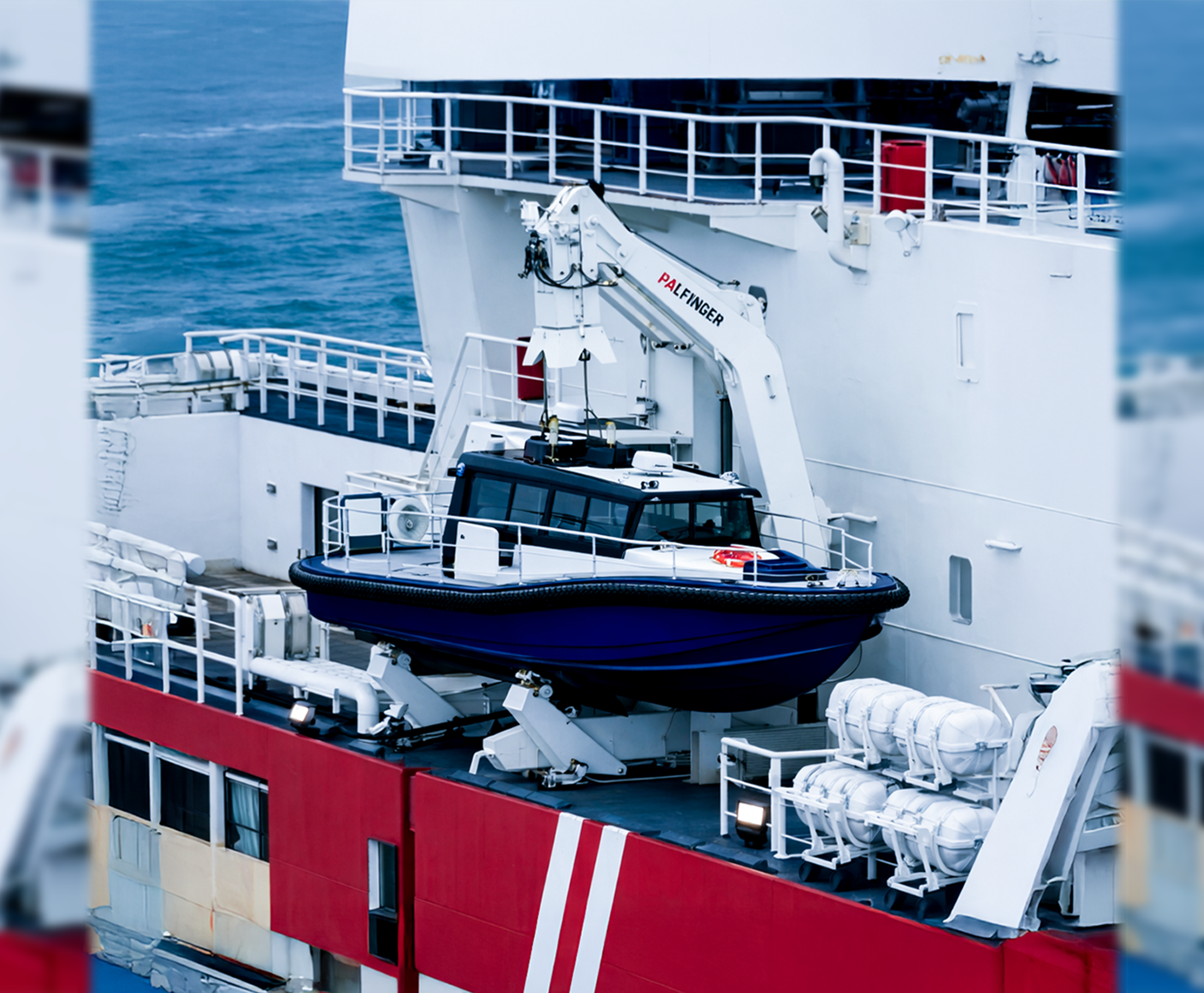
ProZero – 12m FRDC
The ProZero 12M Fast Rescue Daughter Craft – LSH 1 is a versatile, high-performance vessel designed for offshore operations, windfarm support, emergency response, and personnel transfer missions. Built on the trusted ProZero composite platform and fully compliant with SOLAS requirements, LSH 1 combines lightweight construction, exceptional maneuverability, and operational reliability to meet the demanding needs of offshore operators. With an overall length of 12.0 meters, a beam of 3.5 meters, and a shallow 0.9-meter draft, LSH 1 delivers stability and confidence in challenging sea conditions. Its advanced composite sandwich construction, combining glass and carbon fibre with a PVC core, provides exceptional structural strength, natural buoyancy, and minimal water absorption, while maximizing internal space for equipment or up to 26 personnel depending on mission requirements. A robust fender system ensures safe docking and personnel transfer operations. Powered by twin Yanmar 4LV-250 engines with ZF63C gearboxes and Alamarin AJ245 waterjets, the FRDC achieves speeds up to 35 knots while offering precise handling, rapid acceleration, and high maneuverability — essential for fast deployment, search and rescue, or offshore support operations. Integrated electronics, including a Lowrance 12” chartplotter with radar, VHF, EPIRB, and AIS-SART, support safe and efficient navigation in all conditions. Optional lifting equipment such as the H. Henriksen HMKR hook enables secure personnel and cargo handling. Chartering the ProZero 12M FRDC – LSH 1 offers significant operational and financial advantages over vessel ownership. Operators gain immediate access to a modern, mission-ready rescue craft without the capital investment, maintenance burden, or fleet management responsibilities associated with owning a dedicated vessel. Charter arrangements provide flexibility to scale operations according to project timelines, seasonal demand, or specific offshore requirements, ensuring the right vessel is available when needed. Maintenance, servicing, and lifecycle management are included within the charter framework, minimizing downtime and enabling operators to focus entirely on core offshore activities. Fully certified to Bureau Veritas standards and MCA Workboat Code compliant, the ProZero 12M FRDC – LSH 1 is engineered for safety, reliability, and versatility. Whether for emergency response, personnel transfer, or offshore project support, this high-performance daughter craft is a ready-to-deploy solution for modern offshore operations. Specifications Design: 2025 | 5012 Length overall: 12 m Beam overall: 3.5 m Draft (full load), approx.: 0.9 m Capacity: Up to 26 personnel Engines: 2 x inboard Diesel I AM INTERESTED IN THIS BOAT OPEN PRESENTATION
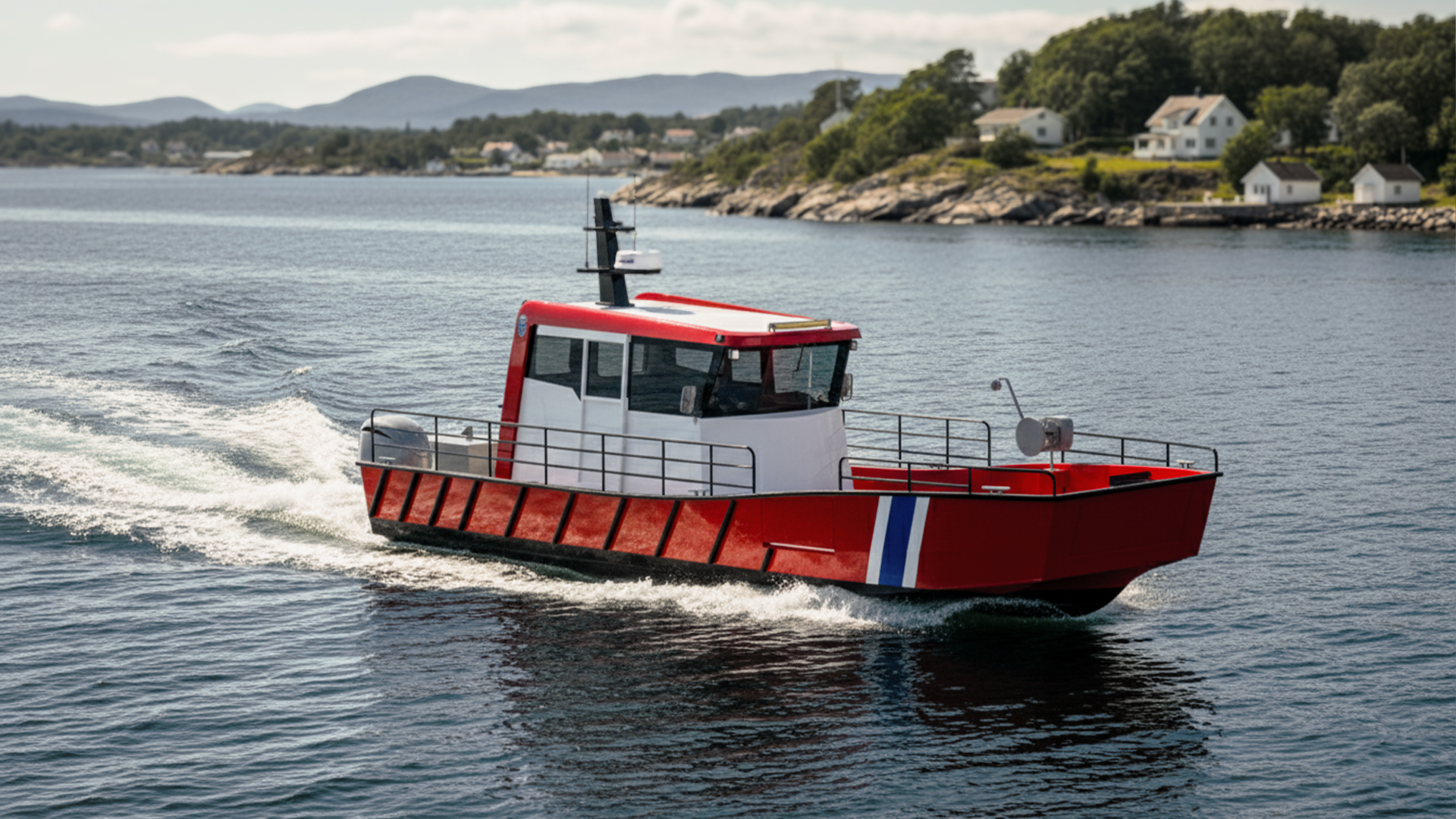
Tuco Marine sells 11m ProZero Mission Master Workboat to Kristiansand Municipality
Tuco Marine Group has entered into an agreement for the delivery of a new 11-metre ProZero Mission Master workboat to Kristiansand Municipality. The vessel has been procured by the municipality as part of its operational cooperation with the Norwegian Archipelago Service. The delivery marks the third time Tuco Marine has supplied ProZero workboats to municipalities operating within the framework of the Archipelago Service in Norway. The new ProZero 11 m Mission Master has been developed for demanding operations in the Norwegian archipelago, where shallow draft, high manoeuvrability and operational flexibility are essential. The vessel will be used for a wide range of tasks, including logistics, environmental operations, inspection duties, transport of equipment, and general work in coastal and shallow-water areas. The vessel is built in fibre-reinforced composite, which is a core element of the ProZero concept. The composite construction combines low structural weight with high strength and long service life. The reduced weight contributes to higher cruising and top speeds, lower fuel consumption and reduced operating costs, while also requiring minimal maintenance compared to traditional construction materials. For municipal and public operators, this results in strong lifecycle economy and high operational reliability. The ProZero Mission Master platform is characterised by a large, open and highly flexible deck layout with a bow ramp, enabling direct loading and unloading of vehicles, machinery and equipment. The wheelhouse is positioned aft to maximise usable deck space and is mounted on vibration-damping rubber mounts to ensure low noise levels and a high level of crew comfort. The vessel is designed and equipped for year-round operation and complies with applicable Norwegian regulations for this category of municipal workboats. “It is very positive for us that a ProZero vessel has now been selected for the third time in connection with municipal cooperation projects under the Archipelago Service in Norway,” says Jonas Pedersen, CEO of Tuco Marine. “Although these deliveries involve different ProZero variants, the repeated choice of the platform clearly demonstrates that our core design philosophy of low weight, high flexibility and strong operational economy performs as intended in real-world operations. The Mission Master model is a clear example of how the platform can be precisely adapted to specific operational requirements.” The delivery to Kristiansand Municipality builds on previous ProZero deliveries to Norwegian municipalities engaged in archipelago operations and underlines Norway’s importance as a key market for Tuco Marine. The harsh and varied conditions along the Norwegian coastline place high demands on both construction and functionality, and repeat orders within this segment are regarded as a strong endorsement of the ProZero concept.