As maritime security challenges intensify—from grey zone incursions to hybrid threats—Unmanned Surface Vessels (USVs) are emerging as essential assets for modern naval and coast guard operations. These autonomous or remotely operated platforms are more than tools for data collection—they’re strategic enablers of persistent intelligence, enhanced surveillance, and real-time decision-making.
In this first article of a three-part series on the role of USVs in sovereignty enforcement, we explore how these vessels are redefining Intelligence, Surveillance, and Reconnaissance (ISR) and Signals Intelligence (SIGINT) in the maritime domain.
Persistent ISR at Sea: Coverage Without Compromise
Traditional ISR at sea relies on a mix of manned patrol vessels, maritime patrol aircraft, coastal radar, and satellites. Each of these has strengths—but also critical limitations. Patrol vessels are resource-intensive. Aircraft have limited endurance. Satellites offer snapshots, not persistence.
USVs offer a new paradigm:
– Persistent presence without fatigue
– Autonomous or semi-autonomous operation
– Low cost per operating hour
– Rapid redeployability
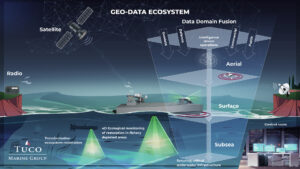
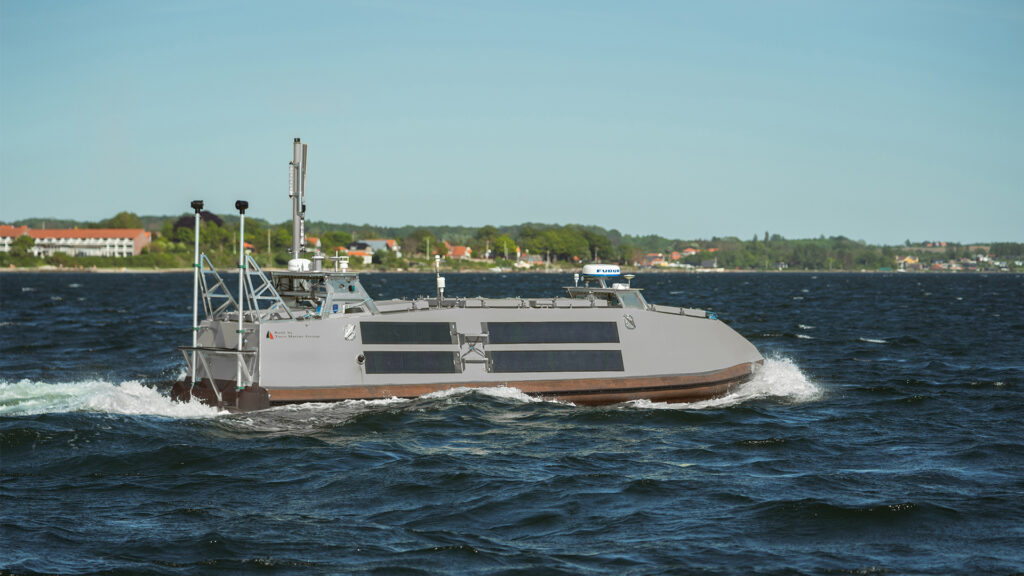
Outfitted with radar, EO/IR sensors, AIS receivers, and even sonar, USVs can maintain long-duration patrols in EEZs, chokepoints, or sensitive maritime zones. They can track vessel movements, monitor environmental conditions, record deviations from standard traffic patterns and shadow targets of special interest.
USVs can also operate in swarms or organized naval groups/forces, covering vast areas without gaps. This makes them ideal for:
– Monitoring grey-zone actors or illegal fishing fleets
– Patrolling offshore wind farms, pipelines, and other critical assets
– Supporting maritime embargo enforcement or counter-smuggling operations
Critically, ISR-enabled USVs can act as early-warning platforms, feeding data to operations centers in real time—offering the maritime equivalent of an unmanned picket line.
Signals Intelligence (SIGINT): Quiet Listening, Strategic Advantage
SIGINT is a vital layer of maritime situational awareness—and an area where USVs excel. By carrying tailored payloads, USVs can collect:
– Communications intelligence (COMINT) — intercepting VHF/UHF/and maritime comms, as well as satcom or GSM-intercept where applicable.
– Electronic intelligence (ELINT) — detecting emissions from radar or jammers
– Emitter geolocation — triangulating signal sources for threat attribution
Unlike manned vessels, USVs can loiter discreetly in sensitive areas for extended periods, silently gathering intelligence. This makes them ideally suited for:
– Detecting unauthorized communications near protected zones
– Mapping the electromagnetic order of battle in disputed waters
– Conducting electronic surveillance near maritime boundaries
For NATO-aligned navies and maritime agencies, SIGINT-enabled USVs can provide critical insight into adversary behavior patterns and electronic posture—without risking personnel or high-value platforms.
Human-in-the-Loop Control, AI on the Horizon
Today, most USVs conducting ISR/SIGINT are remotely operated, with skilled crews overseeing missions from onshore command centers. This ensures real-time interpretation and response, which is critical in high-stakes environments.
However, as machine learning advances, we’re seeing a shift toward onboard AI-powered signal analysis, anomaly detection, and adaptive mission planning. This evolution will allow future USVs to:
– Prioritize targets dynamically based on signal profiles
– Adjust patrol routes autonomously to maintain coverage
– Pre-filter intelligence for human analysts—reducing workload and reaction time
In short, USVs are not only extending the reach of maritime surveillance but are on track to amplify the intelligence yield per deployed asset.
Strategic Implications for Sovereignty Enforcement
In contested waters, situational control often depends on who sees and understands first. ISR and SIGINT-capable USVs tilt this equation in favor of the defender by:
– Denying operational space to unauthorized actors
– Maintaining persistent awareness of maritime activity
– Providing a non-escalatory but credible surveillance posture
For nations facing grey zone pressure or asymmetric threats at sea, USVs provide a scalable, resilient, and cost-effective force multiplier—one that supports both national security objectives and allied interoperability.
Closing Thoughts
Unmanned Surface Vessels are not a future capability—they are operational now, quietly transforming the intelligence landscape at sea. By pairing persistent ISR with discreet SIGINT, they deliver unmatched value in sovereignty enforcement, early warning, and maritime domain awareness and constitutes an invaluable support to traditional maritime surveillance and sovereignty enforcement with manned naval vessels.
→ Want to learn how USVs can support your maritime intelligence and surveillance needs?
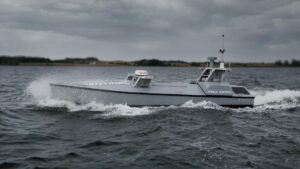
Tuco Marine has extensive experience in designing USVs, and our vessels have been operating 24/7, year-round, in Danish waters for many years – including the North Sea, where challenging wave and wind conditions put both design and performance to the test.
Contact Tuco Marine / ProZero Workboats to learn how our USVs can give you a real operational advantage.